Skip to content
Veda NakshatraJyotish · Since 2010
My KundliVedic ReportsShubh MuhurtaPrashna
Consultation
HomeMy KundliVedic ReportsShubh MuhurtaPrashnaConsultation
HomeMy KundliReportsMuhurta

Learn

Wisdom Library

Thoughtful readings on Jyotish and the living Vedic tradition.

A cricketer at the crease under a starry cosmic sky with a glowing zodiac wheel

Cricket & Karma · 9 min read

Decoding the horoscope of an elite cricketer

Cricket may be a game of immense dedication, practice, and physical prowess, but reaching the heights of glory and international recognition requires a unique astrological makeup. While millions play the sport, true cricketing legends possess a highly specific alignment of Houses, Planets, Rashis (Zodiac Signs), and Nakshatras (Star Constellations) that grants them an edge over the competition.

Read here

DECODING THE PITCH: THE COSMIC BLUEPRINT OF AN ELITE CRICKETER

Cricket may be a game of immense dedication, practice, and physical prowess, but reaching the heights of glory and international recognition requires a unique astrological makeup. While millions play the sport, true cricketing legends possess a highly specific alignment of Houses, Planets, Rashis (Zodiac Signs), and Nakshatras (Star Constellations) that grants them an edge over the competition.

Here is an in-depth astrological analysis of what it takes to succeed as a world-class cricketer.

THE FOUNDATION: CRUCIAL ASTROLOGICAL HOUSES

In the game of cricket, five primary positions — batting, bowling, fielding, wicket-keeping, and captaincy — demand distinct physical and mental traits. These are governed by specific astrological houses:

The 3rd House (Courage & Arms): The fundamental house for any cricketer. It governs the arms and hands, making it critical for the proper grip and manipulation required in batting and bowling, as well as the ability to catch and throw the ball while fielding.

The 5th House (Sports & Entertainment): The traditional house of sports and athletics, providing the foundational talent and creative intelligence required to excel in games.

The 11th House (Gains & Fulfillment): Essential for a successful athlete, this house translates raw talent into actual success, financial gains, and the fulfillment of professional desires.

The 7th House (Partnerships & Leadership): If a player is destined for captaincy, the 7th house must be strong and free from afflictions. This house imparts the ability to manage team spirit, coordinate with others, and display natural leadership.

The 6th House (Competition & Enemies): Domination over the 6th house of enemies and diseases provides athletes with the resilience to survive intense pressure, crush their opponents, and thrive in highly competitive environments.

THE BLUEPRINT: KEY PLANETS AND RASHIS

A player's specific role on the field is heavily dictated by planetary strengths and their associated Zodiac signs:

Gemini: This Rashi is an absolute non-negotiable for cricketers. Gemini governs the arms, hands, and upper body agility, making it vital for almost every action on the pitch — from manipulating the ball while bowling to swift catching in the field.

Mars: The planet of impulsive strength, stamina, and energy. It is the primary driving force behind fast running, powerful batting, and aggressive bowling.

Jupiter: Gives a player patience, agility, and exceptional on-field judgment, allowing batsmen to read the ball correctly and fielders to maintain full-body control.

Moon: Provides the relaxed but hyper-focused mind necessary to anchor an innings and weather the storm of a collapsing batting order.

Sun & Saturn: These planets provide the immense strength, alertness, and endurance for long hours of standing required by a wicket-keeper.

THE SECRET WEAPON: A NAKSHATRA PERSPECTIVE

While planets and houses build the foundation, Nakshatras (lunar mansions) provide the specialized talents and the timeline for historical greatness.

1. Hasta Nakshatra (The Golden-Handed Star): Translating directly to "the hand" or "fist," Hasta is the ultimate star for manual dexterity, lightning-fast reflexes, and flawlessly executed hand-eye coordination. It is inherently linked to success in racket sports, gymnastics, and professions that demand hands-on precision. An elite wicket-keeper or slip-fielder will often have prominent placements here, as the star imparts an almost magical ability to catch and manipulate objects.

2. Magha Nakshatra (The Star of Records): When activated positively, Magha catapults an athlete into the history books. It provides the energy necessary to break world records, dominate an era, and achieve Hall of Fame status, granting a player widespread, legendary recognition.

3. Uttara Phalguni Nakshatra (The Star of Leadership and Trials): Heavily associated with intense fame, leadership, and public adoration, but also carrying the weight of extreme professional trials when activated negatively. It often places the athlete at the absolute pinnacle of the sport, followed by periods of frustrating challenges that test their character and resilience.

LEGENDARY CASE STUDIES: WRITTEN IN THE STARS

To see these cosmic blueprints in action, we need only look at the birth charts of the game's greatest legends.

Sachin Tendulkar (The Wonder Player): Sachin's unprecedented batting success is perfectly reflected in his chart. His Jupiter and Mars (the 3rd lord of arms and courage) are powerfully conjunct in the 5th house of sports, aspecting the 11th house of gains. His Moon is vargottama in the fiery sign of Sagittarius, granting him immense batting prowess, while the crucial sign of Gemini falls in his main house of profession.

Mahendra Singh Dhoni (The Master of the Golden Hand): Dhoni's legendary status as a wicket-keeper and captain is a masterclass in Nakshatra alignment. He possesses a dominant 6th house (natural zodiac Virgo), giving him a massive competitive edge. Crucially, his Lagna and Saturn are placed in Hasta Nakshatra, granting him his trademark lightning-fast reflexes behind the stumps. His Amatya Karaka Moon and Jupiter form a powerful Gajakesari Yoga in Uttara Phalguni Nakshatra, providing immense leadership capabilities — though its negative activation around age 35 also brought about his darkest career phase during the franchise ban and his temporary removal from captaincy.

Dennis Lillee (The Record Breaker): The outstanding Australian fast bowler has his 8th and 9th lord (Saturn) placed in the 3rd house of sports under Magha Nakshatra. When this Nakshatra activated during his 36th year, he didn't just succeed — he became the world record holder for the most Test wickets at the time and was subsequently inducted into the Sport Australia Hall of Fame.

The stars do not swing the bat or grip the ball; the cricketer does. But when Gemini, Mars, Hasta, and Magha conspire in a chart, the pitch itself seems to bend toward greatness.
Open article
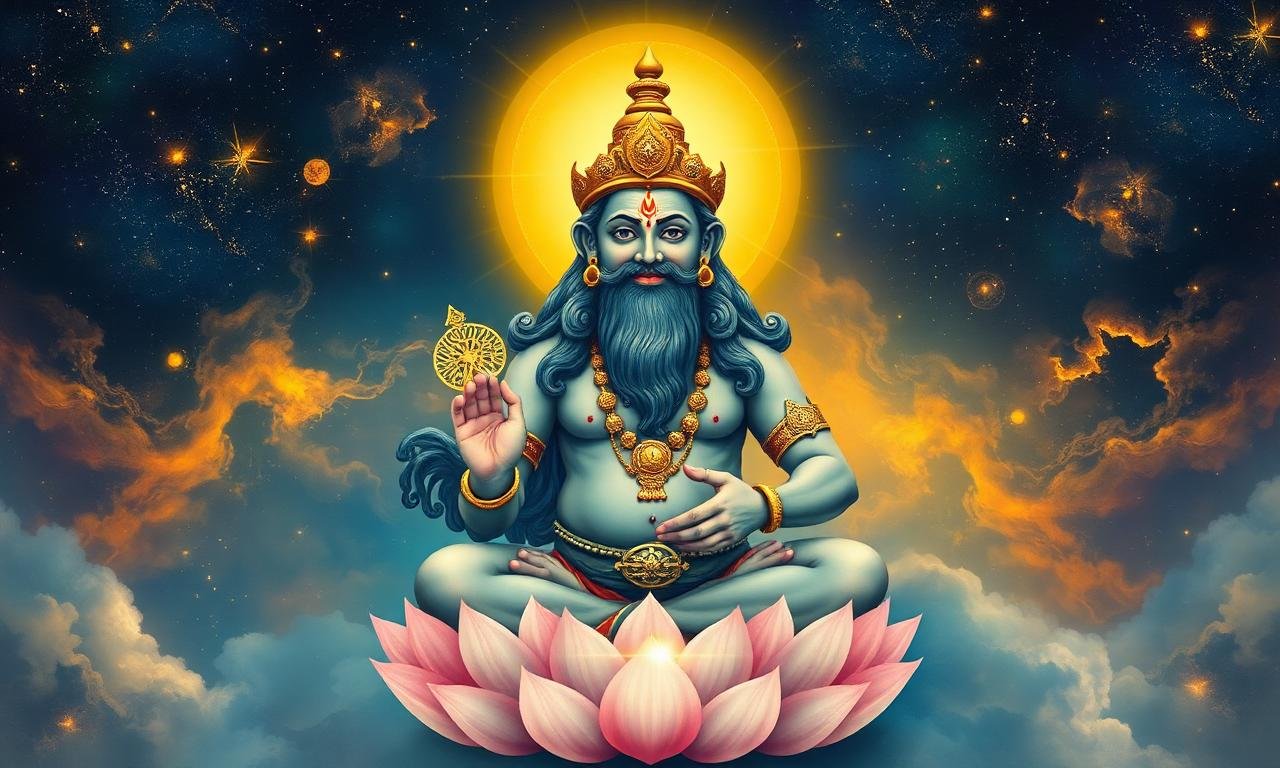
Lord Brahma, deity of Rohini Nakshatra, seated on a lotus amid cosmic clouds

Nakshatras · 8 min read

The hidden poetry of Rohini Nakshatra

"Rohini" is derived from the word "Arohan," which means "rising" or "ascending." Known as The Growing One, it represents energy moving toward the top in wealth, relationships, and creativity.

Read here

​ROHINI NAKSHATRA: THE ESSENCE OF CREATION

"Rohini" is derived from the word "Arohan," which means "rising" or "ascending." Known as The Growing One, it represents energy moving toward the top in wealth, relationships, and creativity.

TECHNICAL FOUNDATIONS

Zodiac: 10 degrees 00 minutes to 23 degrees 20 minutes Taurus.

Ruling Planet: Moon.

Deity: Brahma, the Creator of the universe.

Primary Power: Rohana Shakti, the power to make things grow and increase.

SYMBOLS AND ARCHETYPES

The ox-cart: This symbolizes a life that moves in a solid, systematic, and slow-moving way. It is naturally linked to the accumulation of luxury vehicles and material goods.

The Male Cobra: Represents a nature that is soft-spoken but fierce when defending loved ones or creations. It also indicates a massive potential for spiritual awakening and Kundalini energy.

PSYCHOLOGY AND BEHAVIOR

Originality: Rohini natives are coded for original creation and find it difficult to copy or replicate the work of others.

Aesthetics: They possess magnetic charm and a refined sense of beauty seen in their dress, home decor, and cooking.

The 32-Year Rule: As a fixed Nakshatra, habits or discipline established early in life tend to become their permanent truth.

THE SOUL'S LESSON

The primary shadow side is the trap of possessiveness. Because they create things of great beauty, they often struggle to let them go, leading to obsession or control. The ultimate spiritual lesson for a Rohini native is to create and love your creation, but do not possess it. Letting it grow beyond you is the path to soul evolution.

Open article
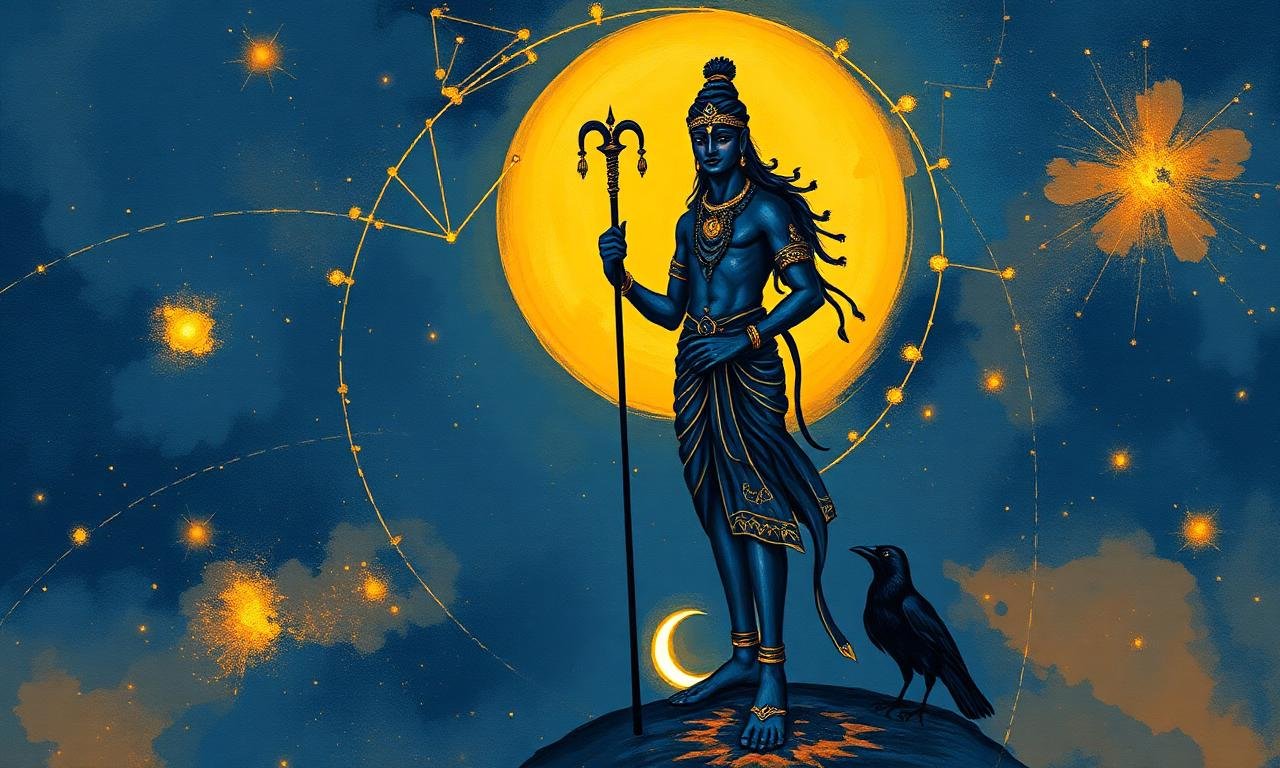
Shani standing over a crescent moon — Shani's Sade Sati

Shani's Sade Sati · 12 min read

Shani’s Sade Sati: navigating the seven-and-a-half year transit with grace

Sade Sati is often described as the most feared transit in Vedic astrology, yet it is fundamentally a period of profound structural realignment. It occurs when Saturn transits the twelfth, first, and second houses from your natal Moon. Lasting approximately seven and a half years, this cycle is a cosmic audit designed to strip away the non-essential and reveal the diamond within.

Read here

Sade Sati is often described as the most feared transit in Vedic astrology, yet it is fundamentally a period of profound structural realignment. It occurs when Saturn transits the twelfth, first, and second houses from your natal Moon. Lasting approximately seven and a half years, this cycle is a cosmic audit designed to strip away the non-essential and reveal the diamond within.

UNDERSTANDING THE THREE STAGES

The cycle is divided into three distinct phases of two and a half years each. The first phase, known as the Rising, begins when Saturn enters the twelfth house from your Moon. This stage often triggers internal anxiety, sleep disturbances, and a sense of hidden pressure. It is a time for introspection and identifying the mental patterns you need to discard.

The second phase, the peak, occurs when Saturn transits directly over your natal Moon. This is the heart of the audit, where the cosmic auditor demands a full accounting of your identity, health, and resilience. You may feel a heavy weight of responsibility or face external challenges that test your partnership capacity. This is the stage where your structural integrity is most visible.

The final phase, the Setting, takes place as Saturn moves into the second house from your moon. The focus shifts toward finances, family values, and the tangible results of the previous five years. As the pressure begins to lift, you start to see the harvest of the lessons learned during the peak.

THE SATURNIAN PHILOSOPHY

Saturn is not a punisher but a slow-moving teacher. Like the ox-cart symbol of Rohini, Saturn moves systematically. He values patience, discipline, and truth. If you approach this period with resistance or ego, the friction increases. However, if you embrace the audit with grace, you emerge with a life built on a foundation that cannot be shaken.

PRACTICAL REMEDIES FOR BALANCE

The sources suggest that strengthening the ninth house of dharma is the most powerful way to navigate this transit. When your sense of purpose is strong, external challenges lose their power. Practical steps include:

1. Saturday Fasting: Observing a salt-free liquid fast until sunset to cultivate discipline and calm the senses.

2. Amavasya Charity: Performing selfless acts or donations on the New Moon to mitigate emotional vulnerability and clear ancestral karma.

3. Mantra and Meditation: Chant Om Namah Shivaya or the Hanuman Chalisa to stabilize the Moon and ground your energy.

THE DIAMOND WITHIN

The ultimate goal of Sade Sati is transformation. Pressure and time are the only factors that turn carbon into a gem. By the end of this seven and a half year journey, you will have shed the layers of illusion and built a reality based on structural truth.

Open article
Mandala of the nine grahas of Vedic astrology around a glowing sun

Remedies · 6 min read

Mantras for the nine Grahas: a beginner’s guide

In Vedic astrology, the nine grahas are celestial bodies that shape our psychology and destiny. According to technical astrological frameworks, these planets influence over 200 life predictions based on their positions and yogas. Mantras serve as sacred frequencies to align the mind with these cosmic energies.

Read here

In Vedic astrology, the nine grahas are celestial bodies that shape our psychology and destiny. According to technical astrological frameworks, these planets influence over 200 life predictions based on their positions and yogas. Mantras serve as sacred frequencies to align the mind with these cosmic energies.

1. THE SUN (SURYA)

Mantra: Om Grinih Suryaya Namah.

The Sun represents the soul, authority, and core identity. This mantra helps build internal power and confidence.

2. THE MOON (CHANDRA)

Mantra: Om Namah Shivaya.

This is the primary remedy to stabilize the mind and manage the emotional rhythms associated with the Moon.

3. MARS (MANGALA)

Mantra: Om Angarkaya Namah (or Mangala Chandika Strotra).

Used to neutralize the malefic effects of Mars and transform aggressive energy into protective strength.

4. MERCURY (BUDHA)

Mantra: Om Budhaya Namah.

Mercury rules the intellect and communication. Chanting this supports analytical clarity and the fulfillment of desires.

5. JUPITER (GURU)

Mantra: Om Gurave Namah.

Known as the Grace-Giver, Jupiter represents wisdom and expansion. This mantra invites harmony and spiritual growth.

6. VENUS (SHUKRA)

Mantra: Om Shukraya Namah.

Venus represents love and material comfort. Its mantra is used to attract harmony and maintain the quality of relationships.

7. SATURN (SHANI)

Mantra: Om Sham Shanaishcharaye Namah.

Saturn is the teacher of karma and the cosmic auditor. This mantra builds the structural resilience needed for difficult life transits.

8. RAHU

Mantra: Om Rahave Namah.

Rahu represents worldly desire and obsession. This mantra helps ground the mind and provides protection against psychological illusions.

9. KETU

Mantra: Om Ketave Namah.

Ketu represents detachment and spiritual liberation. Its mantra aids in letting go of material attachments to find deep internal peace.

Consistency is essential when using these sound frequencies. Most practitioners perform these recitations in cycles of 108 to align with the 27 Nakshatras and their respective quarters.

Open article
Phoenix rising from cosmic ashes with a serpent and hourglass — eighth house transformation

Houses · 10 min read

The eighth house: longevity, transformation, and what lies beneath

The Eighth House is one of the most intriguing and misunderstood houses in Vedic Astrology. It is often associated with mystery, hidden forces, transformation, longevity, and the deeper aspects of human existence. While many people focus on the more visible houses that govern wealth, career, relationships, and achievements, the Eighth House operates beneath the surface, influencing the unseen currents that shape our lives.

Read here

The Eighth House is one of the most intriguing and misunderstood houses in Vedic Astrology. It is often associated with mystery, hidden forces, transformation, longevity, and the deeper aspects of human existence. While many people focus on the more visible houses that govern wealth, career, relationships, and achievements, the Eighth House operates beneath the surface, influencing the unseen currents that shape our lives.

Known as Ayu Bhava, the Eighth House governs lifespan, sudden changes, inheritance, shared resources, secrets, occult sciences, and profound personal transformation. It is the house that encourages us to look beyond appearances and understand the deeper truths of life. Unlike other houses that focus on external accomplishments, the Eighth House concerns itself with inner evolution and the hidden processes that lead to growth and renewal.

One of the primary significations of the Eighth House is longevity. Ancient astrologers paid great attention to this house when assessing vitality, endurance, and overall life force. However, longevity is not merely about how long a person lives. It also reflects one's ability to withstand challenges, recover from setbacks, and adapt to changing circumstances. A strong Eighth House often indicates remarkable resilience and an ability to emerge stronger after difficult experiences.

The Eighth House is perhaps best known as the house of transformation. Life is filled with moments that alter our direction, challenge our assumptions, and force us to evolve. These moments often carry the energy of the Eighth House. Transformation rarely arrives with comfort. Instead, it usually comes through experiences that require us to let go of old beliefs, habits, relationships, or identities. The Eighth House governs this process of shedding what no longer serves us and embracing a new version of ourselves.

Many people associate the Eighth House with death, but in astrology, death often symbolizes transformation rather than a literal ending. The Eighth House represents the cycle of endings and beginnings that occurs throughout life. A relationship may end, a career path may change, a belief system may be replaced, or an old way of living may be abandoned. These symbolic deaths create opportunities for growth and renewal. The Eighth House teaches that every ending contains the seed of a new beginning.

Another significant aspect of the Eighth House is its connection with secrets and hidden matters. This house governs the things that exist beneath the surface, whether they are personal, financial, emotional, or spiritual. It represents hidden motivations, private struggles, confidential information, and the unseen forces that influence human behavior. People with strong Eighth House influences are often naturally curious and possess a desire to uncover truths that others may overlook. They are drawn to investigation, research, and understanding the deeper reasons behind events.

The Eighth House also has a strong connection with psychology and the subconscious mind. It governs our deepest fears, emotional wounds, hidden desires, and unresolved issues. While many people avoid confronting these aspects of themselves, the Eighth House encourages self-examination and healing. By exploring the hidden layers of the psyche, individuals gain greater self-awareness and emotional maturity. This process can be uncomfortable, but it often leads to profound personal growth.

One of the reasons the Eighth House fascinates astrologers is its association with occult sciences and spiritual mysteries. Astrology, numerology, tarot, mysticism, tantra, and other esoteric disciplines all fall within the domain of this house. Individuals with strong Eighth House placements often feel drawn toward understanding the unseen dimensions of life. They seek answers to questions that extend beyond the material world and explore the deeper forces that shape destiny and human experience.

The Eighth House also governs shared resources and wealth acquired through others. This includes inheritance, insurance, investments, joint finances, business partnerships, and family assets. Unlike the Second House, which represents personal earnings and possessions, the Eighth House focuses on resources that are shared or received through external sources. The condition of this house can reveal important lessons related to trust, responsibility, and financial cooperation.

Another important theme of the Eighth House is crisis and recovery. Life occasionally presents situations that force us to confront uncertainty and change. While these periods can be challenging, they often become catalysts for growth. The Eighth House teaches that adversity is not always a punishment. Sometimes it serves as a powerful teacher, revealing strengths and capabilities that might otherwise remain dormant. Many individuals discover their true resilience during periods governed by Eighth House themes.

The planets placed in the Eighth House significantly influence how its energy manifests. The Sun in the Eighth House often creates a strong desire to uncover hidden truths and understand life's deeper purpose. The Moon may bring emotional depth, intuition, and sensitivity to subtle energies. Mars can create courage in facing challenges and a willingness to confront difficult situations. Mercury often produces an investigative mind that enjoys research and analysis. Jupiter can bring wisdom, spiritual insight, and protection during periods of transformation. Venus may create deep emotional connections and an appreciation for the mysteries of intimacy and trust. Saturn often teaches endurance, patience, and lessons involving responsibility and personal growth. Rahu and Ketu can intensify karmic experiences and increase interest in occult and spiritual subjects.

At its highest expression, the Eighth House becomes a gateway to profound wisdom. It teaches that life is constantly changing and that resistance to change often creates unnecessary suffering. By accepting the natural cycles of growth, loss, renewal, and transformation, individuals develop a deeper understanding of themselves and the world around them. The Eighth House reminds us that true power does not come from controlling circumstances but from adapting to them with courage and awareness.

The spiritual lessons of the Eighth House are among the most profound in astrology. It teaches surrender without weakness, courage without aggression, and transformation without fear. It encourages individuals to trust life's deeper intelligence and recognize that even difficult experiences can serve a higher purpose. Through its influence, people often develop greater compassion, wisdom, and emotional maturity.

Working constructively with Eighth House energy requires self-awareness and openness to growth. Practices such as meditation, introspection, spiritual study, journaling, and psychological exploration can help individuals navigate its transformative influence. Rather than resisting change, the Eighth House encourages us to embrace it as an essential part of life's journey.

Ultimately, the Eighth House is not a house of fear but a house of empowerment. It reveals the hidden strength that emerges when we face life's uncertainties with courage. It teaches that beneath every challenge lies an opportunity for transformation and that beneath every ending lies the possibility of a new beginning. The mysteries of the Eighth House remind us that the deepest truths of life are often found not on the surface, but in the unseen realms of growth, healing, and self-discovery.

When understood in its true essence, the Eighth House becomes one of the most powerful houses in the horoscope. It is the house of rebirth, resilience, wisdom, and inner transformation. It teaches that life is not merely about accumulating experiences but about evolving through them. By embracing the lessons of the Eighth House, we learn to navigate change with grace, uncover hidden strengths, and discover the profound truths that lie beneath the surface of existence.

Open article
Venus and Jupiter as luminous planets in cosmic union — compatibility

Compatibility · 9 min read

Beyond Guna Milan: what Ashtakoot cannot tell you

In many homes, the moment a marriage proposal arises, the first question asked is, "How many Gunas matched?" Based on the 36-point Ashtakoot system, life-altering decisions are made. If 36 points match, it is considered a miracle; if 16 match, it is seen as a disaster. However, this approach is fundamentally flawed. Matchmaking is far more complex than a simple point-matching app. To truly understand if a relationship will survive the "marathon" of life, we must look far beyond the Moon-centric Ashtakoot system.

Read here

In many homes, the moment a marriage proposal arises, the first question asked is, "How many Gunas matched?" Based on the 36-point Ashtakoot system, life-altering decisions are made. If 36 points match, it is considered a miracle; if 16 match, it is seen as a disaster. However, this approach is fundamentally flawed. Matchmaking is far more complex than a simple point-matching app. To truly understand if a relationship will survive the "marathon" of life, we must look far beyond the Moon-centric Ashtakoot system.

THE SCREENING TOOL FALLACY: ECG VS. ANGIOGRAPHY

The traditional 36-Guna system, known as Ashtakoot Milan, consists of eight categories: Varna, Vashya, Tara, Yoni, Grah Maitri, Gana, Bhakoot, and Nadi. While these provide insights into temperament (Gana), mental harmony (Grah Maitri), and progeny (Nadi), the entire system stands solely on the Moon’s sign and Nakshatra.

As an astrologer, using Ashtakoot is like performing an ECG for a heart check-up—it is a basic screening tool. It might show general rhythms, but it cannot see the blockages within. To see how the marriage will actually function inside, you need the "angiography" of full matchmaking. This involves analyzing all nine planets, the 12 houses, divisional charts, dashas, and transits. There are countless couples with 30 Gunas who divorce within a year, and others with only 15 Gunas celebrating their silver jubilee because their individual charts were strong.

PARTNERSHIP CAPACITY: THE INDIVIDUAL CHART

True matchmaking begins by reading the boy’s and girl’s charts separately before ever looking at their compatibility. The core of a lasting marriage lies in a native's partnership capacity, found in the 7th house. This house indicates the ability to sustain a partnership with anyone. A person with a strong 7th house can rise above ego and listen to a partner's needs, while a damaged 7th house indicates a desire to control and a feeling of being stuck.

Key factors to audit include the strength and dignity of the 7th Lord. If the 7th Lord is exalted or in its own sign, it signals natural fulfillment. Conversely, if it is in the 12th house or aspected by the 8th Lord, it signals hidden emotional withdrawals and intimacy issues.

THE GRACE-GIVERS: VENUS AND JUPITER

While the Moon runs daily life and emotional attachment, it is not the structure of the marriage. For the relationship to have quality and respect, we must look to the "Grace-Givers": Venus and Jupiter.

Venus represents the quality of the relationship, harmony, and mutual attraction. Jupiter represents wisdom and mutual respect. A common mistake is assigning Venus only to males and Jupiter only to females; in reality, both planets must be stable in both charts. If Venus is stable but Jupiter is weak, a husband may provide material comforts (acting as an "ATM Husband") but lack the maturity the relationship needs.

THE NAVAMSHA (D9): THE INNER REALITY

The Rashi (D1) chart shows the potential—the "fever of romance" and what kind of marriage might come. However, the Navamsha (D9) reveals the inner reality. It shows what happens when real life starts and the initial attraction fades. A strong D1 with a weak D9 suggests a marriage that looks good to the public but is filled with internal friction. An average D1 with a strong D9 often indicates initial struggles that lead to a foundation that gets stronger over time.

THE FRICTION SCORE: MEASURING RESISTANCE

To move beyond the Moon's mental matching, we use the Malefic Scoring Table to calculate a "Friction Score." This audits the placement of Mars, Saturn, Rahu, Ketu, and the Sun in key houses (1, 2, 4, 7, 8, 12). If the scores between the two charts are vastly different, the match should be approached with extreme caution, as it indicates a massive imbalance in their respective partnership capacities.

THE TRUTH ABOUT MANGAL DOSHA

Mangal Dosha (Manglik status) is often viewed as a curse, but it is simply a planetary position indicating high energy and drive. In roughly 70% to 80% of cases, Mangal Dosha is cancelled based on classical rules. A match should never be rejected solely on this basis; instead, one must check if the other chart has the planetary strength to balance that energy.

TIMING AND THE THREE-YEAR RULE

Finally, compatibility is about the capacity to sustain the tie, which is often a matter of timing. Statistics show that 90% of marriages that fail do so within the first year, and another 9% within the first three years. If a couple survives these first three years with patience, their chances of lasting increase to 99%. Checking the Dasha for the next five years is vital to ensure that a damaging planetary period doesn't trigger a separation before the couple has built their foundation.

Open article
Meditating soul before a glowing doorway into the divine — finding one's Ishta Devata

Spiritual · 7 min read

Finding your Ishta Devata through the chart

Among the many spiritual treasures hidden within Vedic astrology, few are as profound as the concept of the Ishta Devata. While most people approach astrology seeking answers about career, relationships, finances, or life events, the sages also left behind a roadmap for something far deeper—the soul's personal connection with the Divine.

Read here

Among the many spiritual treasures hidden within Vedic astrology, few are as profound as the concept of the Ishta Devata. While most people approach astrology seeking answers about career, relationships, finances, or life events, the sages also left behind a roadmap for something far deeper—the soul's personal connection with the Divine.

The Ishta Devata is often described as one's chosen deity, but in reality, it is much more than that. It represents the divine form that resonates most closely with the soul's evolutionary journey. It is the spiritual force that helps the individual overcome karmic obstacles, navigate life's challenges, and ultimately move closer toward liberation.

The key to discovering this sacred connection lies within a remarkable principle of Jaimini astrology. Hidden within the chart is a secret door, and that door is found through the Atmakaraka and the twelfth house from it.

To understand this process, we must first understand the Atmakaraka. In Jaimini astrology, the Atmakaraka is the planet that holds the highest degree in any sign among the seven traditional planets. This planet is considered the significator of the soul. It represents the deepest desires, lessons, and karmic objectives carried by the individual into this lifetime.

The Atmakaraka reveals what the soul is trying to learn and accomplish. It points toward the central themes that repeatedly appear throughout life and often explains why certain experiences seem destined to occur. While the Ascendant describes the personality and the Moon reflects the mind, the Atmakaraka reveals the soul's agenda.

Once the Atmakaraka is identified, astrologers turn their attention to the Navamsha chart, also known as the D-9 chart. The Navamsha is not merely a divisional chart for marriage; it is a sacred chart that reveals the deeper spiritual blueprint of an individual. Many of the soul's hidden motivations become clearer when examined through the Navamsha.

Within the Navamsha chart, the sign occupied by the Atmakaraka becomes known as the Karakamsha. This sign serves as a spiritual reference point and acts as a gateway into understanding the soul's higher purpose.

The next step is where the mystery begins to unfold. Astrologers examine the twelfth house from the Karakamsha. This house is considered one of the most spiritual locations in the entire chart because the twelfth house represents liberation, surrender, transcendence, and the dissolution of worldly attachments.

The planet occupying the twelfth house from the Karakamsha often reveals the Ishta Devata. If no planet occupies this house, the lord of the sign becomes significant. Through this analysis, the astrologer identifies the divine energy that is most aligned with the soul's path.

Why the twelfth house? The answer lies in its symbolism. The twelfth house represents the final release from the cycle of material attachment. It governs spiritual surrender, meditation, higher consciousness, and ultimately Moksha. Since the Ishta Devata acts as a guide toward spiritual freedom, it is fitting that its indications emerge from the house most closely associated with liberation.

Ancient sages understood that each soul resonates naturally with a particular divine frequency. While all forms of the Divine ultimately lead to the same source, different individuals find spiritual growth more accessible through different expressions of divinity. The Ishta Devata reflects this unique resonance.

For example, a strong connection to Vishnu may indicate a path centered around preservation, devotion, righteousness, and spiritual balance. A connection to Shiva may point toward transformation, detachment, inner awakening, and transcendence. A connection to Devi may emphasize nurturing, wisdom, power, and divine grace. Similarly, associations with Ganesha, Hanuman, Kartikeya, or other deities reveal specific spiritual qualities that support the soul's evolution.

The beauty of the Ishta Devata concept is that it transforms astrology from a predictive science into a spiritual science. Rather than focusing solely on events and outcomes, it guides individuals toward a deeper relationship with the Divine.

Many people spend years searching for a spiritual path that feels authentic. They explore different practices, philosophies, and traditions, often wondering which approach is truly meant for them. The Ishta Devata provides a clue. It reveals the divine doorway through which the soul can most naturally receive guidance, protection, and spiritual nourishment.

This does not mean that a person must worship only one deity or abandon existing spiritual practices. Rather, it suggests that one particular divine form may hold special significance for their journey. Devotion directed toward that form often feels more natural, more meaningful, and more transformative.

The concept also helps explain why certain individuals feel inexplicably drawn to a specific deity from childhood. Some people develop a deep connection with Lord Krishna, while others feel an immediate affinity toward Lord Shiva, Goddess Durga, Lord Ganesha, or Lord Hanuman. Often, these attractions are not random. They may reflect the soul's recognition of its guiding divine force.

Understanding one's Ishta Devata can bring clarity during periods of uncertainty. Life inevitably presents challenges, doubts, and karmic tests. During such times, devotion to the Ishta Devata can provide strength, stability, and inner guidance. Many spiritual traditions teach that sincere devotion opens channels of grace that help individuals navigate even the most difficult circumstances.

The sages never viewed astrology merely as a tool for predicting success or failure. Their ultimate objective was spiritual evolution. They understood that while worldly achievements come and go, the soul's journey continues beyond a single lifetime. The Ishta Devata serves as a companion on that journey, helping the soul move steadily toward greater awareness and freedom.

The twelfth house from the Atmakaraka therefore holds a profound secret. Hidden within it is not simply a technical astrological calculation but a sacred invitation. It points toward the divine presence most closely aligned with the soul's highest aspirations.

In a world increasingly focused on external achievements, the search for the Ishta Devata reminds us of a deeper purpose. Beyond careers, relationships, wealth, and status lies the soul's longing to reconnect with its source. The chart contains many stories, but perhaps none are more meaningful than the one that reveals the soul's personal path to the Divine.

The secret door exists in every horoscope. The question is not whether it is there, but whether we are ready to walk through it.

Open article
Our Calculation StandardsLearn how we calculate your chart with Vedic precisionSidereal (Lahiri)Astronomical PrecisionPanchanga AnalysisDasha & TransitsLearn more

Calculations are performed by VedaNakshatra's own Vedic computation engine.

Celestial Framework

Sidereal Vedic astrology · Lahiri Ayanamsha · True / Mean Node methodology where applicable

Astronomical Precision

High-precision astronomical and ephemeris computation

Interpretive Architecture

Panchanga analysis — Tithi, Vara, Nakshatra, Yoga and Karana · House, Bhava and relevant divisional-chart analysis

Predictive Context

Planetary strength, Dasha and transit analysis where applicable · Location, latitude, longitude and time-zone accurate calculation

Ephemeris: Astronomy Engine; Veda Nakshatra local calculations.
Veda Nakshatra

© 2026 Vedanakshatra. All rights reserved.

Privacy PolicyTerms and ConditionsRefund and Cancellation Policy
Explore & contact
HomeVedic ReportsShubh MuhurtaBlogAboutContact